Long-haul fleets have unique demands placed on them when it comes to tires used for long-haul operations. Tires used for long-haul transportation as opposed to regional or mixed service applications, demand in excess of average mileage from their tires, with a focus on low rolling resistance and balanced handling to maximize mileage. Selecting the right TBR tire for long-haul operations requires research of various tire models and consideration of specific applications, including specific on road applications, vehicle applications, gross vehicle weight, fuel efficiency goals, and intended end use and removal from service.
When it comes to TBRs and long-hauls, many different rib, lug and block tread designs are available and by selecting the correct design, considerable cost savings can be made whilst improving safety and increasing the productivity of a user’s fleet. This Buying Guide deals with the main points that must be taken into account when selecting tires for long-hauls, looks at the various tread designs on offer and outlines the points that must be considered when purchasing and maintaining the tires, as well as offering advice on where to purchase them. This guide will be of use to Fleet Managers, Distributors and Commercial Vehicle Users and Owners.
What Factors Should Be Considered When Selecting TBR Tires for Long-Haul Operations?
Choosing the correct Tire for the Right application, or TBR tire pattern for long-haul operations is key to the fleet’s overall performance, better fuel economy and operational reliability. To choose the correct tire, a number of factors have to be looked at in relation to technical and environmental aspects. These factors need to be thoroughly analyzed in order to optimally match the tire to the respective routes and application.
Road Conditions and Operating Environment
The first criterion for choosing the correct TBR tire for a fleet’s operations is to identify the roads which will be traveled by that fleet. For long-haul trucking, the majority of routes consist of highways, which often require consistent speeds and little to no braking. Regional hauls, on the other hand, are conducted on mixed surfaces, and could demand different features in a tire. Additionally, trucks travel in many varying climates and it is essential to take into consideration the temperature as well as any inclement weather that the tires may encounter. Tires with enhanced water dispersion are better for wet climates and can maintain stability when driving in adverse weather. LS938 for example, is a long mileage tire, provides good grip and traction in a variety of conditions as well as excellent water dispersion and heat dispersion to keep the tire operating efficiently throughout long regional hauls. Also critical is an evaluation of how loads are distributed throughout the axle sets and by using corresponding tire patterns for drive, steer and trailer positions, an optimal operating configuration can be realized.
Vehicle Type and Load Requirements
Tire choice is based on vehicle configuration: tractor units, semi-trailers, rigid vehicles etc. and their specific stress. Gross vehicle weight is the main point to choose the right loadindex. A higher load requires deeper tread to maintain its characteristics under high pressure. For cost efficient driving with excellent braking and driving properties on high loads there is the tire model LS398PRO. The LS23B tire model is mainly used for long distance driving on the steer axles and the trailer axles. On these axles the cross-sipe design ensures good traction and low heat generation.
Mileage Expectations and Fuel Efficiency Goals
To achieve economic efficiency in long-haul operations, the primary objective of tire design is to achieve the best possible balance between rolling resistance and tread mileage. For high-mileage operations, special tire compounds have been developed to provide maximum wear. The LS569 tire, for example, is a fuel efficient tire that offers low rolling resistance without sacrificing traction. For long-haul operations with a focus on TCO (total cost of ownership), fuel-efficient tread compounds can help to save operating expenses over time, while at the same time offering consistent wear and good maintenance scheduling.
How Do Different TBR Tire Patterns Affect Performance?
TBR tires are designed with specific tread geometries to deliver performance characteristics of traction, handling, noise and wear uniformity. Understanding these characteristics will help you select the proper tire for your operation.
Rib Pattern for Highway Applications
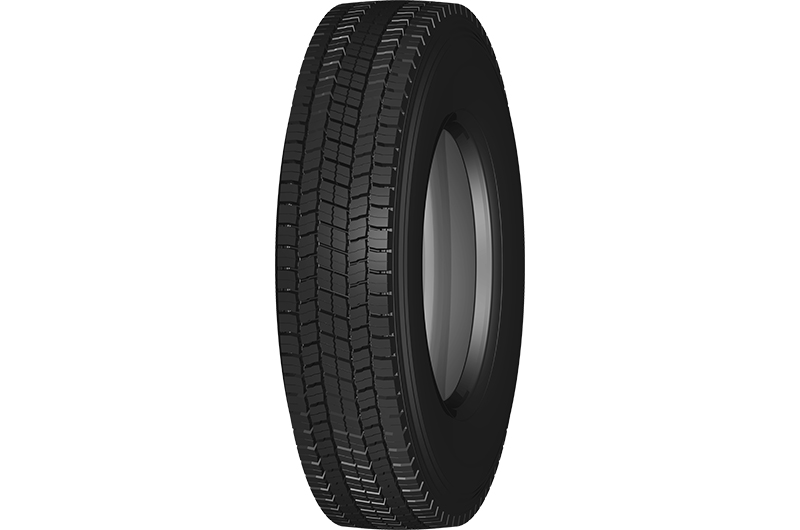
Rib-type TBR tires are designed for highway operation at constant speeds. As they are designed with minimal rolling resistance, they are also very fuel efficient. Even tread wear is another characteristic. Tire patterns like the LS34-2 are designed for extra stability on smooth surfaces such as highways, with an extra-wide tread band, mainly designed for the steer axles.
Lug Pattern for Traction-Oriented Routes
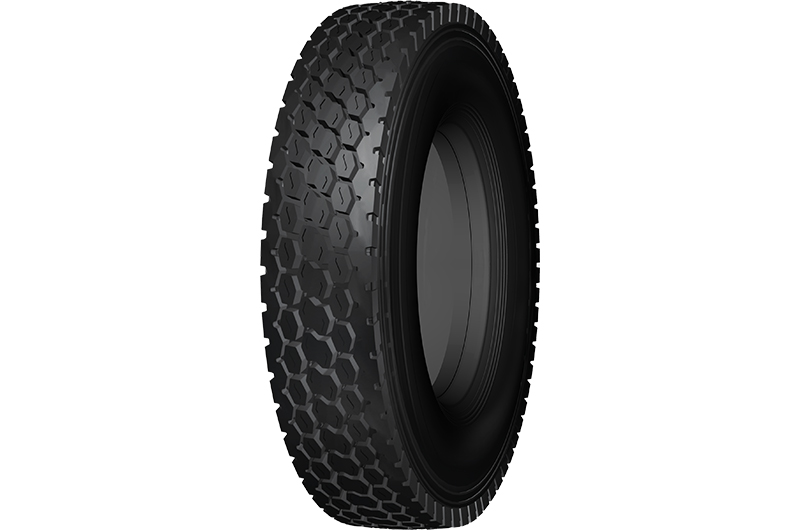
Deep tread lug patterns are designed for applications where high torque is transmitted such as drive axles operating on hills or brake application areas. The LS938 features our regional drive axle design that provides excellent traction and heat dispersion in off road applications. Regional application of drive axle. Good grip and traction performance. Excellent water drainage and heat dispersion performance.
Block Pattern for Mixed Road Conditions
Block-pattern TBR tires offer the rib stability of on-road tires and the lug traction of off-road tires. This makes them an ideal tire for use by fleets of trucks that operate on a variety of road surfaces including city streets and regional highways. A tire such as the LS868 from Locomaster Tires uses a mixed-deepen block tread pattern. This provides improved self-cleaning ability as well as excellent traction on mud and other very rough surfaces. This is ideal for use as a ‘commuter’ tire, allowing the operator to drive on the highway during the day and then operate on construction sites, etc. during the day.
How Can Maintenance Practices Extend TBR Tire Life?
Even the premium long-haul tire needs dedicated maintenance in order to unlock its full performance capability. With suitable care the risk of standstill times can be minimized, premature wear prevented and safe operation ensured in the long term.
Regular Inspection and Pressure Management
Maintaining correct inflation pressure prevents irregular wear patterns such as cupping or shoulder erosion. Digital monitoring systems integrated into modern fleet management tools can track real-time pressure changes across all axles. Routine visual inspections should also check for cuts, punctures, or sidewall bulges that may compromise structural integrity.
Alignment, Rotation, and Balancing Procedures
Proper wheel alignment extends tire tread life by evenly wearing the two outside shoulder lugs rather than prematurely wearing them. Tire rotation on a axle-by-axle basis ensures balanced and even tire wear. As with balancing, periodic checking and balancing of tires prevents excessive vibration which can damage bearings and other suspension components.
Retreading Practices for Cost Optimization
Retreading within a quality framework extends the usable life of a tire casing. Only test tire casings for their structural integrity and then retread them. Choose the correct retread tire design to match the original tire tread on your tire. Track the number of retreads per casing to plan the timely replacement of tires for your fleet.
Why Is Supplier Selection Important in Choosing TBR Tires?
Supplier reliability is not only a measure of the quality of the products supplied, but also of the supplier’s ability to deliver in a timely and efficient manner, as well as to provide suitable technical support in all regions of the world. This is a critical factor in the global Fleet Management context.
Evaluating Technical Support Capabilities
We recommend that Fleet Operators choose suppliers who are able to provide engineering consultation during the pattern selection phase. This allows for the best possible match for a specific route profile. The reports provide for analytical comparison of mileage on different loads.
Assessing Product Range and Quality Control Systems
Dependable supplier, supplying the full range of certified tire patterns for on road applications, from long distance highway use to various types of off road use on mixed surfaces. The supplier would guarantee that all products are made to International quality standards, such as ISO/TS certification, and that all production batches will meet the same quality control criteria.
Who Is QINGDAO LANDER-SKY TYRE CO., LTD?
Qingdao Lander-Sky Tyre Co., Ltd. is a professional manufacturer and exporter specializing in TBR, OTR, Agricultural, Industrial, and PCR tires. Established in 2013, the company serves customers in more than 50 countries and regions worldwide, providing high-quality products, strict quality control, and comprehensive after-sales support.
The company operates five production workshops with total floor area of over 3,000 square meters. With the most advanced refining equipment, calendering machine, tire forming machine, vulcanization machine and testing machine, the company strictly controls each processing step from raw materials selection to X-ray testing before shipping out. Our company philosophy is to maintain a long-term partnership with our customers, i.e. the spirit of a 100-years partnership with our customers, and we also provide a 3-years warranty to our customers. We do not merely sell tires, we provide total service to our customers after sales.
Innovative models such as the LS938 for regional drive axles are designed to meet specific demands, e.g. to achieve the best possible combination of grip, water discharge and thermal treatment during long runs in the logistics networks.
What Are the Key Takeaways When Choosing a TBR Tire Pattern?
Selecting an appropriate TBR tire pattern requires aligning operational objectives—fuel economy versus durability—with environmental realities such as road type or weather exposure:
Rib patterns remain optimal for highway fleets prioritizing mileage consistency.
Lug configurations deliver superior traction where torque loads dominate.
Block designs provide adaptability across variable terrains without compromising endurance.
By integrating these considerations into procurement strategy alongside disciplined maintenance programs and reliable supplier partnerships like those offered by QINGDAO LANDER-SKY TYRE CO., LTD., fleet operators can significantly lower total cost per kilometer while enhancing safety margins throughout their transport networks.
FAQs
What is the main difference between rib, lug, and block TBR tire patterns?
Tire ribs are designed for a smooth rolling motion on highways, lug patterns have been designed for high torque traction, and tire block patterns offer a good balance between the two for various driving conditions.
How often should long-haul fleets rotate their TBR tires?
Typical distances for rotation are between 10,000 to 15,000 km, depending on axle configuration and obvious unequal wear during the inspection intervals.
Can retreaded TBR tires perform as effectively as new ones?
When verified tire casings are retreaded under strict quality control measures – such as X-ray inspected during manufacturing by tire retread manufacturers – tires derived from those tire casings will have tire performance characteristics similar to new tires as long as the retread does not compromise the casing’s structural integrity before it was retreaded.
What tire pressure is recommended for long-haul TBR tires?
Recommended inflation pressure varies by tire size, load index, and axle position. For most long-haul steer axles, pressures typically range between 110–120 psi (7.6–8.3 bar), while drive and trailer axles may operate at 100–110 psi (6.9–7.6 bar). Always refer to the tire sidewall markings and the vehicle manufacturer’s guidelines for specific pressure settings. Under-inflation increases rolling resistance and fuel consumption, while over-inflation reduces traction and causes center tread wear.
How can fleet managers track tire performance across multiple vehicles?
Modern fleet management systems integrate tire pressure monitoring systems (TPMS) and telematics platforms that record tire temperature, pressure, and mileage data in real time. Many TBR tire suppliers also offer fleet management software that tracks tread depth, rotation schedules, retread history, and cost-per-kilometer metrics. This data-driven approach enables predictive maintenance, identifies underperforming tires, and optimizes replacement intervals to reduce total cost of ownership across the entire fleet.