

Certain TBR tires can fit on both steer and trailer axles. However, this does not mean every commercial truck tire works in all wheel positions. Steer tires must deliver accurate directional control and steady highway handling. They also need strong resistance to irregular wear. Meanwhile, trailer tires require stable free rolling and low heat buildup. They must resist scrub well. Before using a single tire pattern in both spots, fleet managers and owner-operators must check several details. Distributors and replacement buyers should verify the manufacturer’s position approval. They must also confirm the tire size, load index, and speed symbol. Furthermore, inflation rules, road conditions, and vehicle setup are crucial factors.
Can One TBR Tire Really Be Used on Both Axle Positions?
The answer relies on how the manufacturer designed and labeled the tire. Buyers should never assume a straight-rib tread makes a tire fit for both uses. A matching tire size does not automatically mean it works everywhere.
When Is the Answer Yes?
A TBR tire works in both spots when its product sheet marks it as a steer/trailer or all-position tire. Commercial tire makers build some all-position models approved for multiple axle locations. Other products are made strictly for steer, drive, or trailer duties. Bridgestone’s commercial tire guide clearly tells buyers to look at the planned wheel position. They must also consider the service type before picking a tread.
A steer/trailer model normally features a rib-style tread. It avoids the large transverse blocks often seen on drive tires. Circumferential ribs boost directional stability and help with free rolling. This makes the pattern a great choice for many highway steer and trailer tasks.
When Should the Tire Not Be Moved Between Positions?
A tire must not move to another axle if the maker rejects that position. It is also wrong if the size, load rating, or speed limit falls short. The rim or working pressure must meet the vehicle’s exact needs.
Drive tires serve as a clear example. Their block or lug patterns are built to transfer engine torque and give solid traction. They often create more noise and rolling resistance than a standard highway rib tire. Furthermore, they might lack the quick steering response needed on the front axle. Bridgestone points out that rib designs fit best on steer and trailer spots. Lug designs belong mainly on drive axles.
Why Do Steer and Trailer Axles Need Different Performance?
Even though both spots might use a similar rib pattern, the physical forces are quite different. Buyers must look at how the truck runs. They should not pick a tire just by its looks.
What Does a Steer-Axle Tire Need to Do?
The steer axle guides the vehicle’s path. Therefore, the tires must offer reliable response and firm straight-line stability. They need good wet-road grip and strong defense against uneven shoulder or rib wear. In long-haul work, low noise and managed heat buildup matter a lot. High-speed ability is also vital.
Uneven front-tire wear can result from bad alignment or poor balance. Suspension flaws, wrong pressure, and tough driving routes play a part too. A tire approved for steer use still demands proper vehicle care to give steady service.
What Does a Trailer Tire Need to Do?
Trailer tires do not handle engine torque. Yet, they carry heavy loads and face sharp lateral scrubbing during turns. Spread-axle trailers and constant tight maneuvers cause huge scrub forces. Urban delivery routes add to this stress.
For highway trailer use, buyers usually want smooth free rolling and strong defense against irregular wear. Low heat buildup and firm load support are top goals. A steer/trailer tire can do a great job if its build and tread fit both spots. Still, the running conditions must match the product’s main purpose. Bridgestone names high-speed capacity and low rolling resistance as key traits. Irregular-wear defense is also crucial for line-haul trailer tires.
What Should Buyers Check Before Using the Same Pattern?
Running one tire model on two axle positions can make stock and buying much easier. However, this choice must rely on strict specs rather than pure convenience.
Is the Tire Officially Approved for Both Positions?
The product page, data sheet, or maker’s written guide must clearly state the allowed positions. Words like all-position or steer/trailer give helpful clues. Position icons offer good guidance too.
Do not trust claims that a pattern simply “looks like a steer tire.” Two similar rib patterns might feature totally different rubber mixes. They could have distinct casing builds, tread depths, and load ratings. Their planned working conditions can differ greatly.
Do the Load Index and Tire Size Match the Vehicle?
Review the complete sidewall mark. This includes the tire size, ply rating, and load range. Check the load index, speed symbol, and standard rim size. Look at both single and dual load limits.
A tire’s load limit can change between single and dual setups. Steer-axle tires are mostly mounted as singles. In contrast, many trailer axles rely on dual pairs. Buyers must check the real axle load against the proper single or dual rating. They should never rely solely on the basic tire size.
The truck must be weighed when fully packed. Each axle needs a separate check. Michelin suggests comparing real gross axle weights with the tire maker’s charts. This helps find the exact load capacity and right air pressure.
Does the Tread Match the Route?
A highway steer/trailer rib tire is not an instant fit for rough mine roads or busy building sites. It struggles in deep mud or harsh mixed-service paths. Straight grooves work much better on smooth paved roads. They suit steady speeds and long trips.
Buyers must think about total yearly miles and highway time. Rainfall, road quality, and average speed matter greatly. Turning frequency, axle layout, and planned load are also key. A tire built for smooth highways might wear out fast on sharp rocks. Poorly kept roads can cause severe damage.
How Does the LS217 Fit Steer and Trailer Applications?
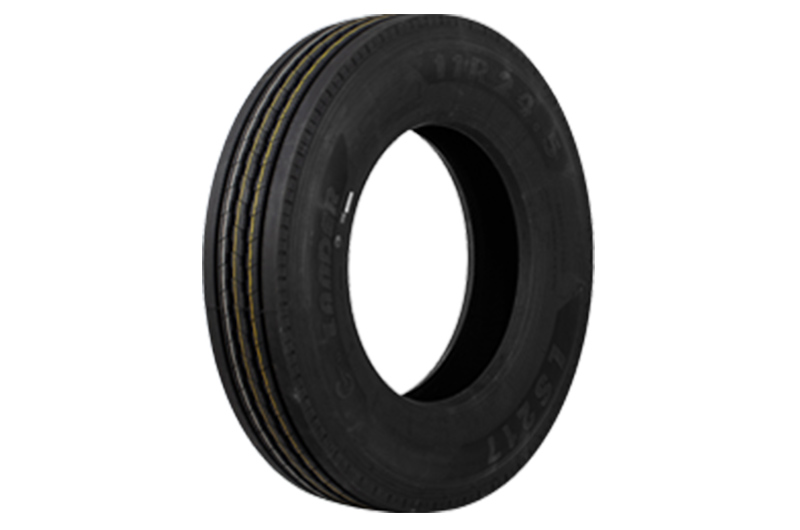
QINGDAO LANDER-SKY TYRE presents the LS217 as a strict long-haul TBR tire. It is made for highway steer and trailer wheel duties.
What Are the Main LS217 Specifications?
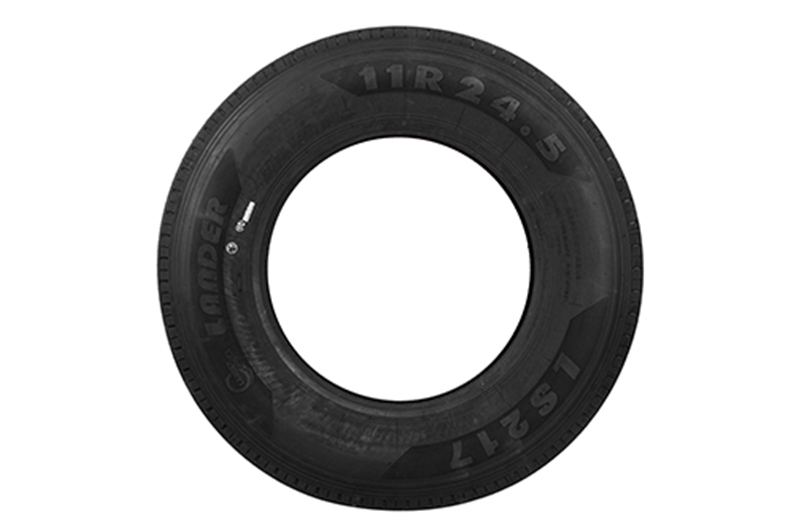
The stated LS217 size is 11R24.5, packing 18PR. It shows a 149/146 load index and an M speed symbol. The tire fits an 8.25-inch standard rim. Its official sheet lists a 3,250 kg single-load limit and a 3,000 kg dual-load limit. It features a 13.5 mm tread depth and a suggested air pressure of 830 kPa.
The 149/146 mark is highly vital for dual-position tasks. It gives distinct load indices for single and dual mounting. Buyers must still check the needed capacity against true axle weights. Vehicle papers and local rules must be followed.
Which Roads Suit the LS217?
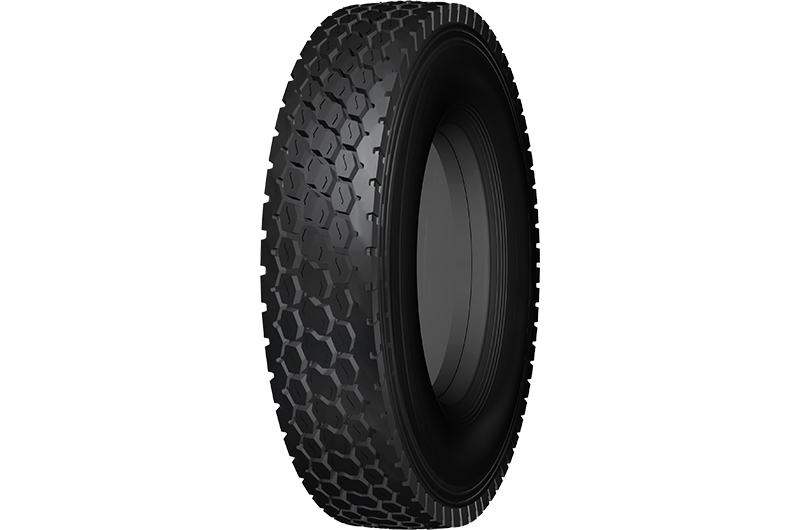
The LS217 features four straight circumferential grooves. It is built for highways and solid paved roads. Its main goals include steady steer/trailer handling and rapid wet-road drainage. It aims for lower heat buildup and a quieter highway ride.
It must not replace a thick-lug drive tire or a tough mine-road pattern. Buyers driving on mixed, broken, or off-road paths must share route facts before choosing this model.
How Should Fleets Install and Maintain Steer/Trailer Tires?
Getting the right position approval is just the start. Good setup and care habits impact safety, total mileage, and handling. They also protect the casing shape.
Should Tires Be Matched Across the Same Axle?
Tires on one axle must match in size, build, and load limit. They should have similar remaining tread. Big gaps in diameter or tread depth can trigger uneven loading. This causes irregular wear, especially in dual pairs.
All tires must go on approved rims. They need careful checks for damage, age, and bead health. Past repairs must be reviewed. Any planned swap between steer and trailer spots must follow the tire provider’s rules. The fleet’s own care policy applies too.
How Should Inflation Pressure Be Set?
The pressure printed on a product page or sidewall is not a magic number for every truck. The right pressure comes from the real axle load and tire size. The single or dual setup matters. The maker’s load-and-inflation chart is the best guide.
Pressure must be tested when the tires sit cold. Michelin tells fleets to weigh each axle alone. Then, adjust the pressure to fit the load and task. Keep equal pressure across tires on the same axle when possible.
Why Choose QINGDAO LANDER-SKY TYRE CO., LTD.?
A solid TBR tire supplier helps buyers match tire position, size, and road state. They review load limits and market demands before sealing an order.
What Makes LANDER SKY TYRE a Reliable Supplier?
Started in 2013, QINGDAO LANDER-SKY TYRE CO., LTD. delivers TBR, OTR, farm, factory, and forklift tires. The firm runs five workshops with tight quality checks. It offers a three-year warranty and fast after-sales help. It serves clients across many global markets.
To get an LS217 quote, buyers should share the needed size and axle spot. They must detail the driving route and order amount. The target country and packaging needs are also helpful. The firm shares facts on MOQ, mixed-container choices, lead times, and OEM packing.
What Is the Final Decision?
The same TBR tire fits on steer and trailer axles only if the maker clears both spots. The specs must fit the truck’s true working conditions. Buyers have to check the load limit, single or dual setup, and speed rating. Rim match, air pressure, road type, and planned duty are critical.
The LS217 is made strictly for highway steer and trailer tasks. Its straight-groove design is a smart pick for long-haul buyers. It offers steady handling, rapid wet-road drainage, and low heat buildup. It ensures a quiet paved-road trip.
FAQs
Can I Install a Drive Tire on the Steer Axle?
Normally, buyers should pick a tire cleared specifically for steer or all-position duty. Drive-tire lug patterns focus mostly on torque and grip. They might fail to give the sharp steering response or low noise needed on the front axle. Their rolling traits may not fit well.
Can an LS217 Be Used on Both the Tractor Steer Axle and Trailer?
The LS217 is marked for highway steer and trailer spots. Buyers must still make sure the 11R24.5 size and load limit fit. The rim type, speed symbol, and air needs must match each truck and axle perfectly.
What Information Should I Send for an LS217 Quotation?
Please send the tire size, planned axle spot, and average axle load. Share the maximum load, road conditions, and yearly miles. Include the order amount, target country, and packing needs. These facts help LANDER SKY TYRE check product fit and build a highly accurate quote.



Leave a comments