

Truck tire tread patterns should be selected for the operating job, not for appearance alone. A useful shortlist starts with the route, axle position, road surface, typical load, and required tire size. Buyers can then compare rib, block, and mixed designs against the tire maker’s stated application. This approach keeps a familiar-looking tread from being fitted where its intended service does not match the vehicle.
The practical answer is simple: use rib-oriented designs when directional stability and free rolling lead the requirement, consider block or lug features when drive-position traction is central, and treat mixed patterns as an application-specific compromise. In every case, confirm the product’s wheel-position and service guidance before ordering.
Tread Pattern Choice Starts With the Operating Job
The main pattern families give buyers a quick way to organize a search, but they do not replace product specifications. Each family emphasizes a different relationship between the contact area, grooves, and tread elements.
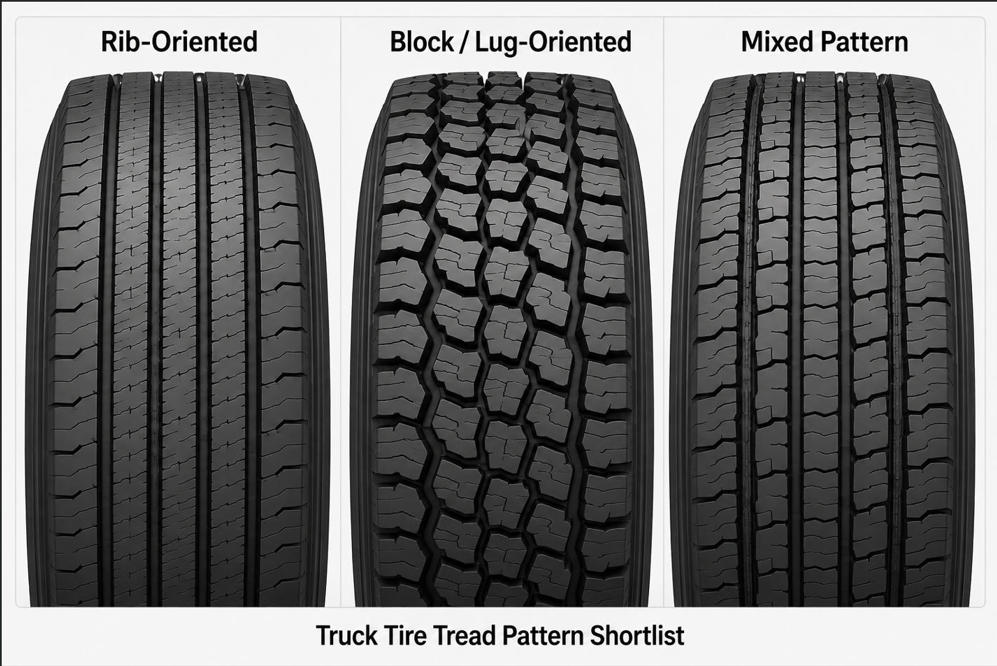
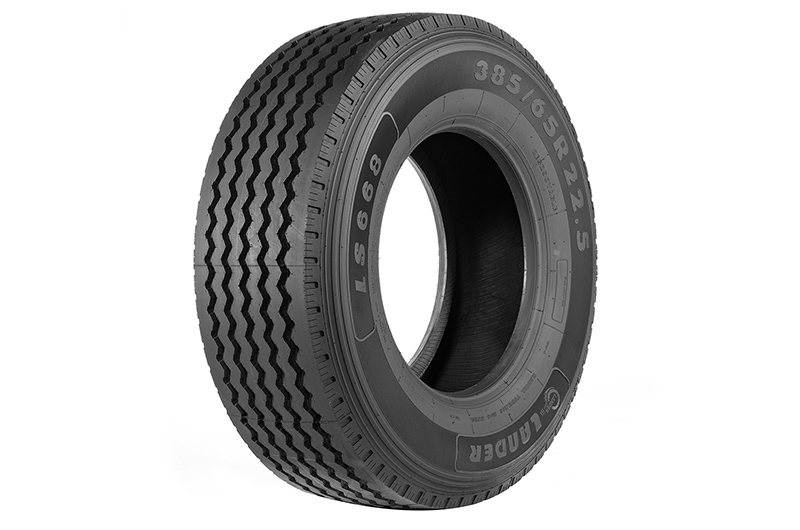
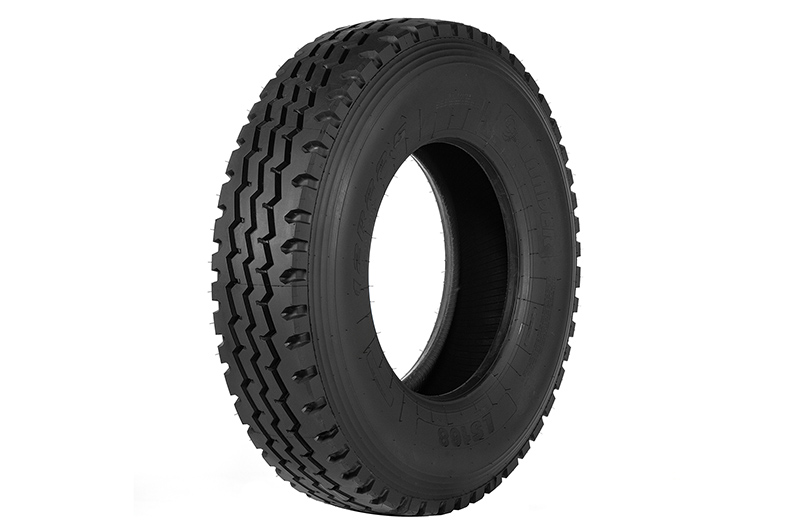
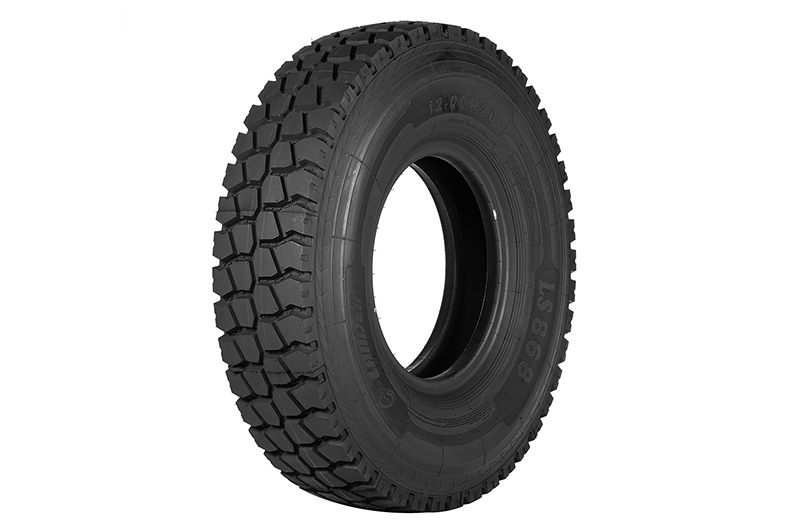
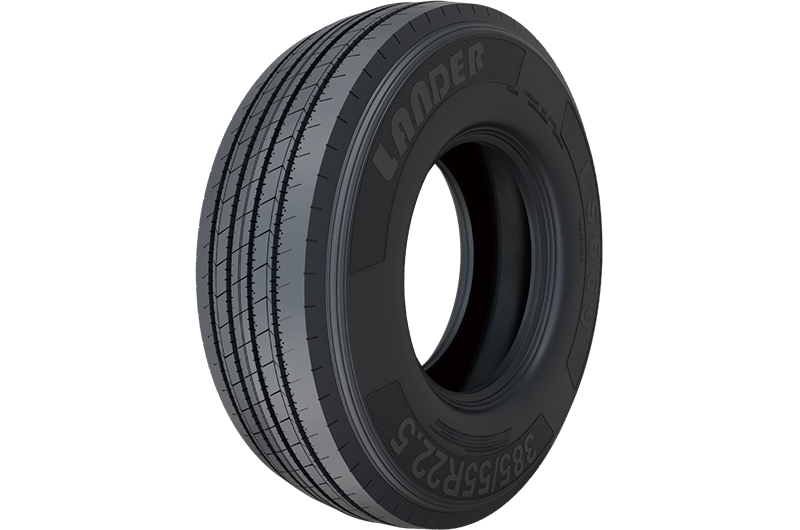
Illustrative tread-pattern shortlist. Confirm the intended axle and application for each product.
Rib patterns prioritize directional stability and even rolling contact
Rib-oriented truck tire tread patterns use continuous elements that run around the tire. Their layout makes them a logical starting point when steering response, directional tracking, and free rolling are important. Circumferential grooves also create channels through the tread face.
This does not mean every rib tire belongs on every steer or trailer axle. Buyers still need to check the model’s stated wheel positions, route category, size, load information, and rim requirements. A rib appearance is a selection clue, not a fitment approval.
Block patterns prioritize traction and torque transfer
Block or lug-style elements create more transverse edges across the tread. For that reason, drive-position tread design commonly emphasizes this family when traction and torque transfer are priorities. The pattern should still be evaluated as part of a complete tire rather than as an isolated feature.
More open blocks do not automatically produce the best result for every drive axle. Surface, route speed, load, tread stability, and the manufacturer’s intended application can change the trade-off. A buyer should avoid turning “more aggressive” into a universal purchasing rule.
Mixed patterns balance guidance and traction features
Mixed truck tire tread patterns combine rib-like guidance with block or lug features. They can enter the shortlist when an operation needs both directional control and traction characteristics, especially where routes are not uniform.
The balance differs by model. One mixed design may favor stable regional operation, while another may be built around a more demanding surface. The product description and specification table should decide whether the design belongs on the proposed axle and route.
Route and Axle Position Change the Pattern Priority
Application information should narrow the pattern family before price comparisons begin. The table below turns route and wheel-position information into practical purchasing questions.
| Operating need | Initial pattern direction | Buyer check | Misuse risk |
| Directional stability and free rolling | Rib-oriented design | Confirm intended axle, route, size, and load | Rib appearance alone is treated as fitment approval |
| Drive-position traction | Block or lug-oriented design | Confirm surface, load, size, and manufacturer guidance | Traction-focused appearance is mistaken for universal drive suitability |
| Varied route or mixed duty | Combined rib-and-block features | Check which duty the product page prioritizes | A compromise pattern is assumed to solve every operating conflict |
| New product or changed route | Controlled fleet trial | Track pressure, wear, damage, and removal reason | A short, unrecorded trial is treated as a fleet-wide result |
Long-haul highway work rewards consistency
Long, steady routes usually make stability, predictable wear, and heat control important screening points. A rib-oriented option may be considered, but the buyer should verify whether the product is listed for the intended steer, drive, trailer, or all-position use.
Highway service also exposes weak assumptions quickly. Choosing truck tire tread patterns without checking axle load, inflation guidance, and route speed can undermine an otherwise reasonable pattern choice. The operating file and product data need to agree.
Regional work adds braking, turning, and start-stop demands
Regional vehicles may combine urban turns, repeated braking, delivery stops, and shorter highway sections. These changes can place different demands on shoulders and tread elements. Buyers should describe the route mix instead of using “regional” as a complete specification.
For steer and trailer positions, directional stability may remain central. For drive positions, traction and torque transfer may carry more weight. The final choice should still follow the model’s published application rather than a broad pattern label.
Mixed and non-paved surfaces require controlled traction
On mixed or non-paved roads, a more open tread can become relevant because the drive axle needs usable traction. However, deeper or more open truck tire tread patterns should not be selected by visual aggressiveness alone.
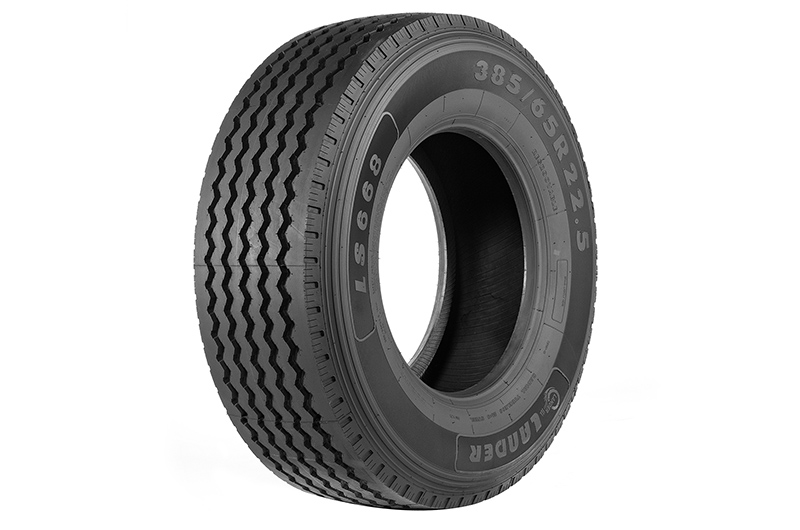
The shortlist should also account for casing design, size, load, speed, route surface, and the product’s intended service. If the operation includes both paved and non-paved sections, record the actual proportion and the conditions that create the greatest risk.
A Four-Step Tread Pattern Selection Process Keeps the Shortlist Practical
A repeatable selection process gives procurement teams and fleet technicians the same decision inputs. Use the following four steps before requesting final quotations.
– Record the complete route before comparing truck tire tread patterns.
– Mark the intended wheel position on every shortlist of truck tire tread patterns.
– Check size, load, rim, and service limits for candidate truck tire tread patterns.
– Define a controlled trial before approving new truck tire tread patterns for wider use.
Record the route and surface mix
Describe highway distance, regional stops, construction access, non-paved sections, gradients, turning frequency, and seasonal surface conditions. Avoid reducing a mixed route to a single label if that label hides the most demanding section.
Match the pattern to the axle duty
State whether the tire is intended for steer, drive, trailer, or an approved multi-position application. Then identify the priority: directional guidance, traction, free rolling, or a controlled balance. This prevents the tread face from becoming the only selection input.
Compare load, size, and service limits
Confirm the required tire size, wheel and rim configuration, expected load, and any applicable speed or service limits. Review the manufacturer’s technical information for each candidate. Two similar-looking truck tire tread patterns may have different fitment boundaries.
Run a controlled trial and keep wear records
Introduce a new model on a defined group of vehicles and record the route, wheel position, pressure control, inspections, damage, tread measurements, and removal reason. Keep the test conditions consistent enough to support a useful internal decision. Do not turn one short trial into a universal performance claim.
Product Examples Connect Pattern Features With TBR Applications
Verified product pages show how a pattern description becomes useful when it is tied to wheel position, route category, and size. The following examples illustrate that reading process without presenting either model as suitable for every fleet.
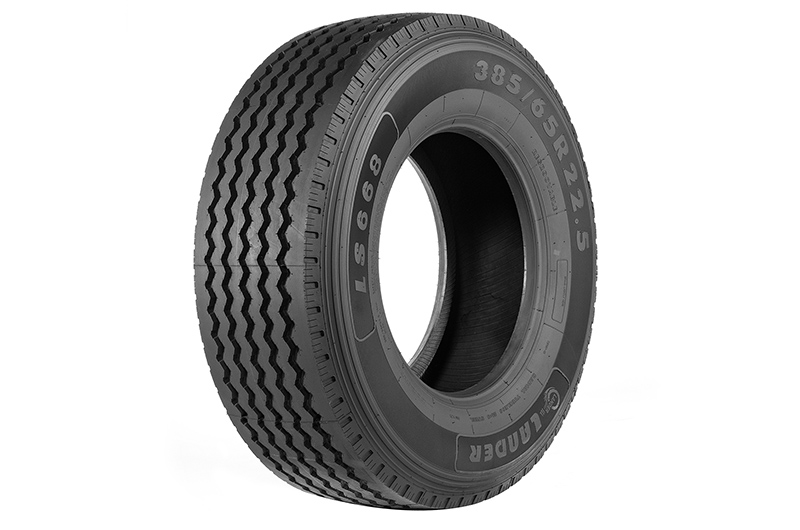
LS668 illustrates a five-groove regional design
The official LS668 regional TBR tire page describes the model as a steer and trailer option with a five-groove tread design. It lists 385/65R22.5 as an available size. This gives buyers a clear sequence for evaluation: identify the pattern feature, confirm the intended wheel positions, and then review the published specification fields.
LS668 regional steer-and-trailer TBR tire with a five-groove tread design.
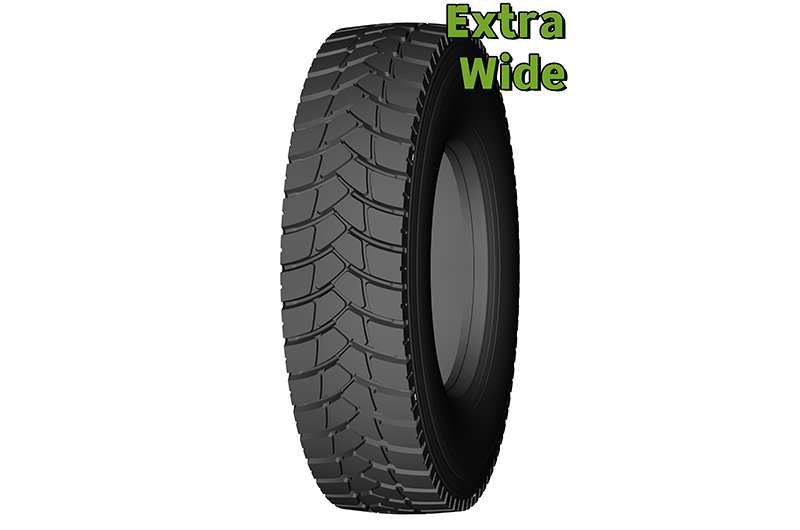
LS668 is therefore a product-page example of how rib-oriented truck tire tread patterns can be discussed in a regional steer or trailer context. Its official description should be used for shortlisting; the fleet’s actual size, load, rim, and route still need confirmation.
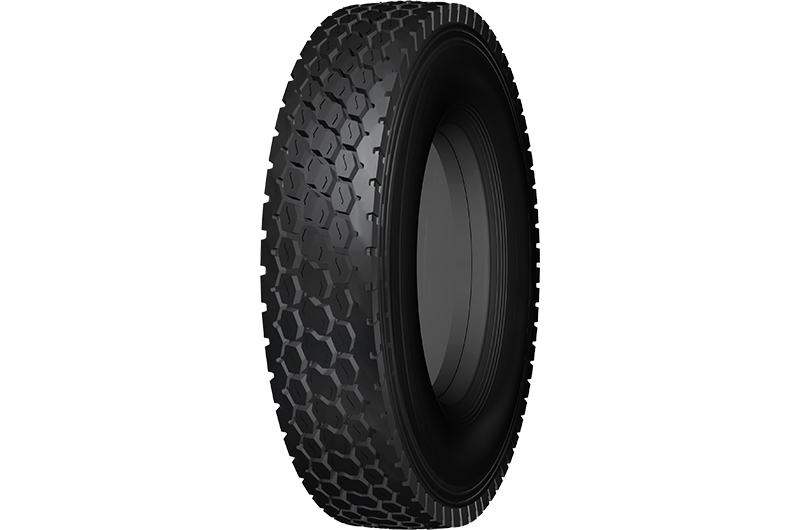
LS302PRO illustrates a drive option for non-paved service
The official LS302PRO drive-position TBR tire page describes a regional model for non-paved roads and lists 315/80R22.5 22PR specification support. Here, the application language connects the drive position and surface requirement to the product choice.
LS302PRO regional drive-position TBR tire for non-paved road service.
The example also shows why buyers should not compare block-oriented designs only by tread depth or appearance. The product’s stated service, wheel position, size, and other specification details are part of the same decision.
QINGDAO LANDER-SKY TYRE CO. ,LTD Supports Application-Based TBR Selection
QINGDAO LANDER-SKY TYRE CO. ,LTD has focused on tire design and production since 2013, and its listed product range includes TBR tires. Buyers reviewing commercial truck tires can send the required size, wheel position, route, surface mix, and typical load before requesting a model recommendation. This application file helps connect truck tire tread patterns with relevant product pages and keeps the sourcing discussion centered on fit rather than tread appearance alone.
Conclusion: Select the Pattern From the Job, Then Verify the Product
The right choice among truck tire tread patterns begins with the vehicle’s work. Rib-oriented designs can support a shortlist focused on guidance and free rolling, while block or lug elements commonly enter drive-traction decisions. Mixed designs need an equally clear application reason. Record the route, axle duty, size, load, and surface conditions, compare verified product guidance, and trial a new model under controlled conditions before wider use.
Common FAQs About Truck Tire Tread Patterns
The following questions address common buyer concerns when comparing pattern families and preparing a TBR tire shortlist.
Which truck tire tread pattern is best for highway use?
There is no single pattern for every highway vehicle. A rib-oriented design is often a sensible starting point when stability and free rolling are priorities, but the manufacturer must list the tire for the proposed axle, size, load, and service.
Why do drive tires often use block tread patterns?
Drive-position designs commonly use block or lug elements because the tread needs to transfer torque and support traction. The exact pattern should still match the route surface and the tire maker’s application guidance.
Can a rib-pattern tire be used on a trailer?
Some products are intended for steer and trailer positions, but the rib appearance alone is not enough. Check the product page or technical data for the approved wheel positions and operating conditions.
Do deeper tread patterns always last longer?
No. Tread depth is only one input. Load, pressure control, alignment, route, surface, casing, tread stability, damage, and removal practices can all influence the result.
How does tread pattern affect irregular wear?
Pattern geometry influences how tread elements contact and move against the road, but irregular wear should not be blamed on the pattern automatically. Pressure, alignment, suspension, load, wheel position, and route conditions should also be inspected.
What should buyers compare besides tread appearance?
Compare the intended axle position, tire size, load information, rim, route category, surface mix, published application, inspection plan, and supplier documentation. These inputs provide a stronger basis than appearance alone.
When should a fleet trial a new tread pattern?
A controlled trial is useful when a route changes, a current design does not suit the recorded duty, or a new model is being considered for wider use. Define the vehicles, positions, route, inspection method, and decision criteria before the trial begins.



Leave a comments