

Anyone who has spent time around mining equipment knows that tyres don’t fail “all of a sudden.” There is almost always a slow build-up of stress behind the scenes, often starting with heat. Operators may see rocks, rough haul roads, sharp edges, or a heavy load and assume that’s what kills a tyre—but in many cases, the real damage comes from temperature creeping higher hour after hour. Once the heat gets into the rubber and the carcass, the tyre starts aging from the inside long before anything shows on the outside. For mining operations that rely on continuous equipment operation, this internal aging caused by poor heat dissipation directly increases tyre replacement costs and downtime.
In deep mines or high-temperature sites, this happens faster than most people expect. A loader working underground, for example, can begin its shift in air that already feels warmer than any workshop. The machine moves constantly—no long breaks, no cooling pauses—and every cycle adds a little more temperature to the tyre. After the midpoint of a shift, the sidewalls feel softer, the shoulders warm up, and the internal cords begin to carry more strain than they were meant to. It doesn’t make noise, and it doesn’t alert the operator right away, but the clock starts ticking.
On surface mines, the picture is different but the result is similar. A haul truck rolling down a long grade with a full bed generates heat from flexing, braking, and road friction. Even when the weather is cool, the tyre heats up simply from constant weight transfer and repeated deformation. Overloaded runs and under-inflated tyres make the problem worse. Many fleet managers say the same thing: “Cut resistance is easy to see. Heat isn’t.” And that’s exactly why heat dissipation has become such a critical part of OTR tyre design.
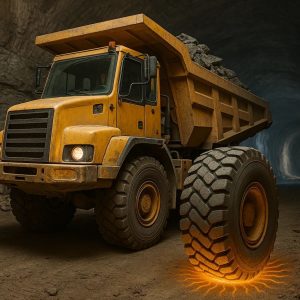
Why Heat Build-Up Is a Serious Threat in Mining Sites
Deep mines trap heat and limit airflow
Air temperatures rise as operations go deeper underground. A tyre that would run comfortably at 55–60°C on the surface might run at 70–80°C underground simply because there’s nowhere for the heat to escape. When this happens:
- Rubber becomes softer
- Cord tension increases
- Fatigue begins earlier in the shift
In some mines, tyres never drop back to a normal temperature range, even during shift changes.
Surface trucks generate heat through long rolling cycles
Haul trucks driving long distances at moderate speeds experience:
- Tread block flexing
- Shoulder compression
- Repeated load impact during braking
All of these generate heat inside the tyre. When the truck is fully loaded, each tyre carries an enormous amount of weight, and every rotation adds more internal temperature.
Round-the-clock operations leave no time for cooling
OTR tyres used in 24/7 operations rarely cool to baseline temperatures. Tyres that run hot all day and stay warm all night enter a cycle of thermal fatigue that shortens service life dramatically.
What Happens When a Mining OTR Tyre Overheats?
Rubber breakdown
Heat causes the rubber molecules to lose strength. Cracks begin showing at:
- The shoulder
- Between lugs
- The bead area
Once the compound hardens or becomes brittle, the tyre wears faster and loses grip.
Carcass fatigue and cord weakening
Most catastrophic failures originate here. Excessive heat weakens the internal cords, leading to:
- Sidewall bulging
- Bead area separation
- Sudden carcass collapse
Even minor temperature spikes, repeated for weeks, can cause long-term damage.
Tread separation due to internal stress
Layers inside the tyre expand and contract at different rates when overheated. This mismatch can create separation lines, which eventually grow into visible damage.
Overall faster wear
Heat accelerates every form of abrasion. A tyre that might normally last six months in a quarry may only last four when running at consistently higher temperatures.
How Modern OTR Tyres Combat Heat in Mining Work
Heat-resistant rubber compounds
Newer tyres use compounds that:
- Hold their flexibility at higher temperatures
- Resist oxidation
- Reduce heat absorption from constant flex
This keeps the tyre more stable over long shifts.
Tread patterns that lower rolling resistance
Patterns designed for cooler running often feature:
- Wider center ribs
- Reinforced blocks
- Lug shapes that flex less
Less flex means less internal heat.
Reinforced shoulders built for high stress points
The shoulder generates more heat than any other part of the tyre. Modern OTR tyres use:
- Cooler-running shoulder blends
- Heat-dissipating groove shapes
- Added reinforcement in known stress zones
These features slow down crack formation.
Carcass designs that handle thermal expansion better
Tyres built with high-denier cords, advanced bonding layers, and stronger steel belts help maintain shape and strength even during temperature swings.
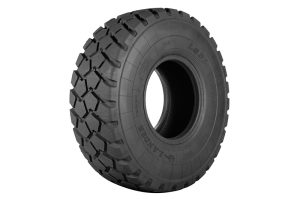
Choosing the Right OTR Tyre for Heat-Intensive Mining Sites
Start with the mine environment
Different mines require different heat strategies:
- Basalt quarries → sharp edges + high friction
- Deep gold mines → warm air + poor ventilation
- High-altitude surface pits → long haul cycles
Matching tread pattern and compound to the actual site is essential.
Match tyre rating to load and speed
A tyre built for 20 km/h will not survive a 30 km/h haul cycle in hot weather. Load index and speed index should match:
- Peak load
- Average load
- Emergency load conditions
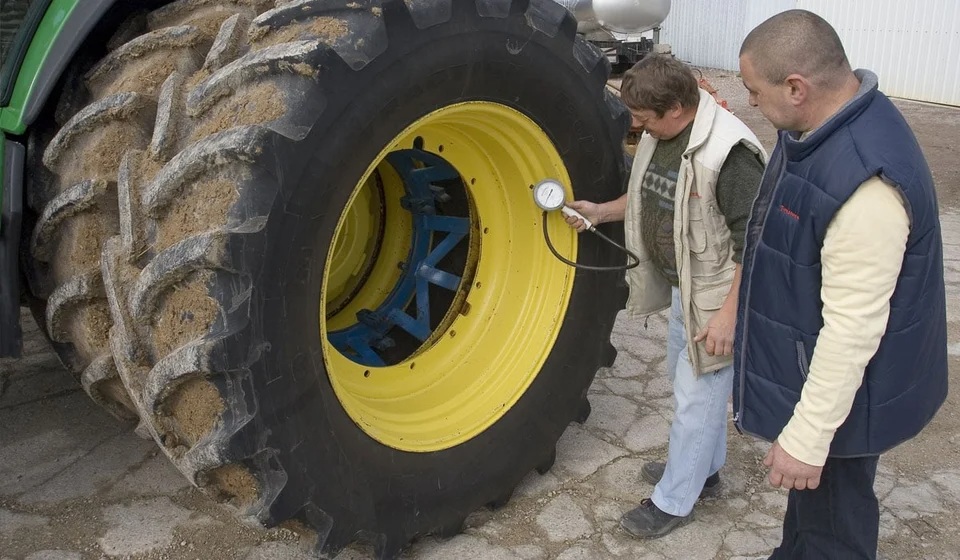
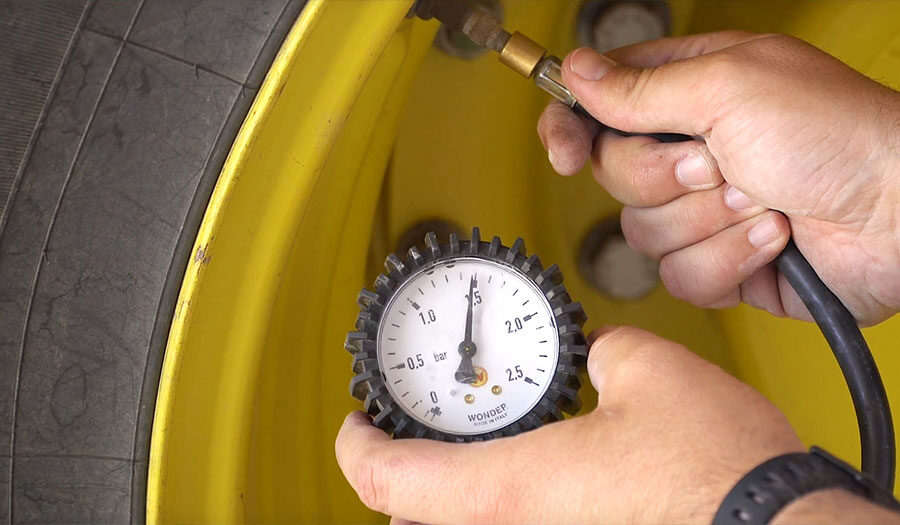
Inflation pressure matters every single day
Under-inflation is one of the fastest ways to create excessive heat. Over-inflation concentrates heat in smaller contact areas.
Look for tyres built for continuous operation
Not all OTR tyres are meant for 2-shift or 3-shift operations. Continuous-duty mining requires:
- Stronger bonding layers
- Lower-heat compounds
- Carcass protection against fatigue
About Qingdao Lander Sky Tyre
A natural introduction based on the company’s official information:
Qingdao Lander Sky Tyre manufactures a broad range of off-the-road tyres for loaders, dump trucks, graders, port machinery, and heavy equipment used in mining and construction. The company works extensively with customers operating in difficult environments, where heat, sharp rock, and long duty cycles challenge tyre durability.
Its tyres are built with reinforced carcasses, heat-resistant rubber compounds, and tread designs intended to stay stable in deep mines or high-temperature regions. For fleets that struggle with temperature-related failures, this type of construction helps reduce downtime and maintenance cost.Learn more about its mining OTR tyre series for heat dissipation here.
Conclusion
Heat doesn’t burst a tyre the same way a sharp rock does. It works slowly, almost quietly, until the rubber, cords, or bonding layers can’t take the stress anymore. In mining operations—especially deep or high-temperature sites—managing tyre heat is a big part of keeping equipment running and costs under control.
Modern OTR tyres approach the problem from several angles: stronger carcass builds, cooler-running tread compounds, smart shoulder designs, and patterns that flex less. When all of this works together, the tyre stays closer to its ideal temperature range. And that means more predictable wear, fewer early failures, and a smoother operation overall. Companies like Qingdao Lander Sky Tyre design their OTR products with these real-world conditions in mind, giving fleets tools that fit the harsh conditions they deal with every day.If you’re looking for OTR tyres tailored to your mining site’s heat challenges, contact our team today for a free consultation—or download our Mining Tyre Heat Dissipation Guide to learn more.”
FAQs About Tyre Heat Dissipation and OTR Tyres in Mining Operations
Why is tyre heat dissipation critical in mining?
Mining tyres face heavy loads and continuous cycles. When the rubber overheats, it loses strength, which increases the risk of cracking, tread separation, or carcass failure.
What conditions make OTR tyres overheat most often?
Deep mines with warm air, long haul roads, overloaded trucks, and improper inflation are the most common reasons tyres gain heat faster than they can release it.
Can tyre selection help reduce heat build-up?
Yes. Tread patterns with lower rolling resistance, strong bonding layers, and heat-resistant rubber compounds all help tyres run cooler during long mining cycles.
Does tyre pressure affect operating temperature?
Very much. Low pressure increases flexing, which generates heat. High pressure shrinks the footprint and creates hot spots. Correct pressure slows heat accumulation.
Does Qingdao Lander Sky Tyre make tyres for heat-intensive mining conditions?
Yes. The company builds OTR tyres with reinforced carcasses and rubber compounds that hold up better in deep mines and high-temperature operations.
Still have questions about mining tyre heat dissipation? Fill out our online form, and a tyre expert will get back to you within 24 hours.



Leave a comments